Service Charge vs Tip: The Key Differences
Understand the key differences between mandatory service charges, automatic gratuity, and voluntary tips to avoid double tipping on your bill.
More restaurants now add fees to the bill. You might see a “service charge,” an “automatic gratuity,” or a “service fee.” Then the payment screen still asks for a tip. It’s no wonder diners feel confused. This guide explains the service charge vs tip difference in simple terms. You’ll learn how each works, how to read your bill, and when an extra tip makes sense.
What Is a Service Charge on a Restaurant Bill?
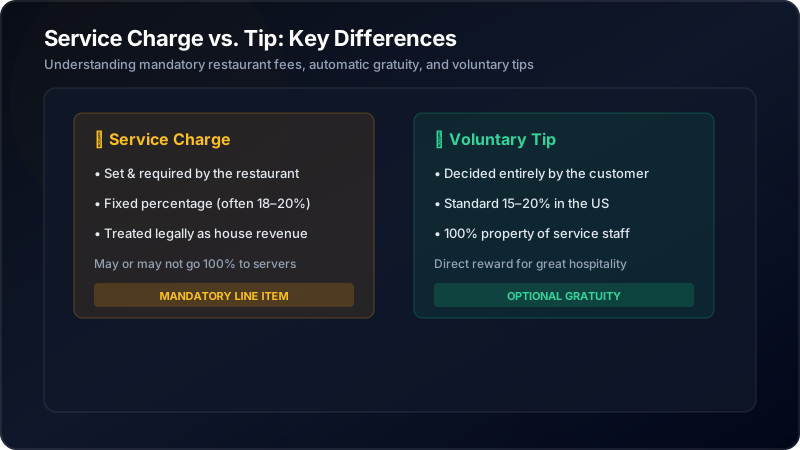
A service charge is a fee the restaurant adds to your bill. It’s often a fixed percentage, like 18% or 20%. Some restaurants add it to every check. Others add it only for large groups.
Because the restaurant sets it, a service charge isn’t voluntary. You usually have to pay it, as long as it was clearly disclosed. Restaurants typically mention it on the menu, on a sign, or on the bill itself.
What Is a Tip and How Does It Work?
A tip is money you choose to give for good service. You decide whether to leave one and how much. In the US, 15 to 20% is common at sit-down restaurants.
Tips are generally meant for workers. They may go to your server alone or be shared with other staff through a tip pool. The key word is voluntary. A tip is your personal thank-you, not a required charge.
How Tip Pools Share Your Gratuity
Some restaurants pool tips among servers, bussers, and bartenders. This recognizes the team behind your meal. Rules for tip pools vary by state, but the money is still meant for workers.
How Does a Service Charge Differ From a Voluntary Tip?
The main difference is choice. A tip is optional, while a service charge is set by the business. That affects who controls the money and how it’s used.
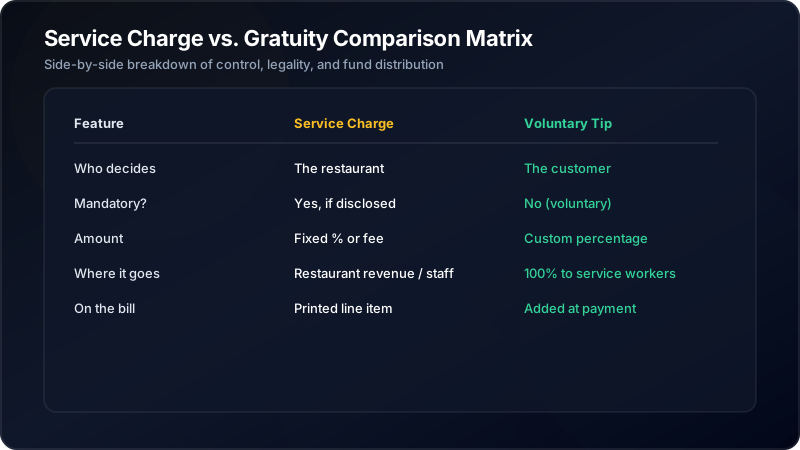
The table below compares them side by side.
| Feature | Service Charge | Tip |
|---|---|---|
| Who decides | The restaurant | You |
| Required? | Usually, if disclosed | No |
| Amount | Set percentage or fee | Your choice |
| Where it goes | Depends on restaurant policy | Meant for workers |
| Shown on bill | Printed as a line item | Added by you |
Can a Restaurant Add Both a Service Charge and a Tip?
Yes, many bills show both. The restaurant adds a service charge, and the receipt still includes a tip line. That tip line is optional.
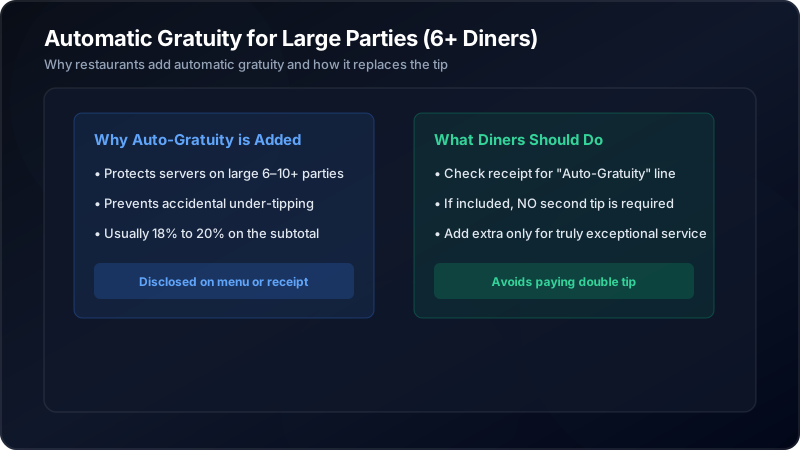
This setup can lead to double tipping if you don’t notice the charge. Always scan the bill before adding more. If an 18% service charge is already there, an extra tip is your choice, not a must.
How Should You Read a Bill That Includes a Service Charge?
Start at the top and move down slowly. Find the subtotal, then look for lines like “service charge,” “gratuity,” or “service fee.” Note the percentage and the dollar amount.
Next, check the tax line and the total. Then look at the tip line at the bottom. If a gratuity already appears above it, you know service is at least partly covered. This careful bill breakdown takes less than a minute.
Spotting Hidden Fees on a Restaurant Receipt
Some fees use vague names, like “kitchen appreciation fee” or “wellness fee.” These aren’t always tips. If a line is unclear, ask your server what it covers.
How Do Suggested Tips Work When a Service Fee Is Already Included?
Payment screens often suggest tips automatically. They may not account for a service charge already on the bill. So a suggested 20% could stack on top of an 18% fee.
Choose “custom” or “no tip” if the service charge already covers what you intended. Case study: Picture a couple whose $80 dinner included an 18% service charge. The screen suggested another 20%. After asking the server, they learned the charge went to staff and added just a few dollars extra.
Does a Service Charge Always Go Directly to the Server?
Not always. Policies differ from one restaurant to another. Some pass the full charge to workers. Others use part of it for wages, benefits, or business costs.
In the US, tax rules generally treat service charges differently from tips. A service charge is typically considered business revenue, even when it’s later paid out to staff. That’s why asking matters. If you want your server to receive extra money for sure, a separate tip is often the clearest way.
How Can Automatic Gratuity Differ From a Standard Service Charge?
Automatic gratuity is a type of service charge. It’s commonly added for large parties, such as groups of six or eight. It’s usually labeled as gratuity, which signals it’s meant to replace the tip.
A general service charge may be labeled differently and used in different ways. Some are meant for staff, while others help cover business costs. The label gives a clue, but the restaurant’s policy tells the full story.
Why Restaurants Add Automatic Gratuity for Large Groups
Large groups take more time and effort. They also sometimes forget to tip. Automatic gratuity protects servers. It also saves the group from calculating tips for many people.
What Should You Look for in the Restaurant’s Written Fee Policy?
Check menus, table cards, and websites for fee details. A clear policy explains the fee’s name, its percentage, and when it applies. It may also say whether it goes to staff.
Look for words like “does not go to your server” or “distributed to staff.” Some states and cities require restaurants to disclose mandatory fees clearly. If the policy is vague, ask before paying. That simple question helps you understand restaurant bill fees fully.
Conclusion
A service charge is set by the restaurant, while a tip is your personal choice. Service charges don’t always go to servers, and policies vary widely. Automatic gratuity is usually meant to replace the tip for large groups. Read every bill carefully, check fee policies, and ask when something is unclear. With this knowledge, you’ll understand how service charges and tips differ and tip with confidence.